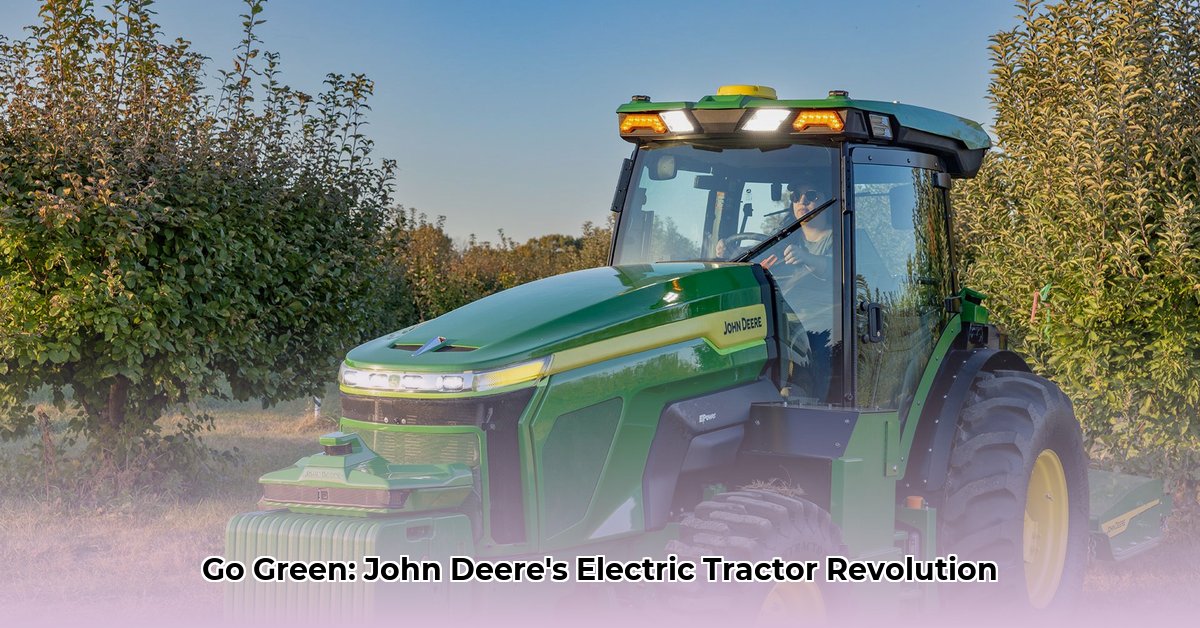
John Deere, a titan in the agricultural industry, is leading a quiet revolution. The roar of traditional diesel tractors is fading, replaced by the hum of electric power. This isn't just about a new type of tractor; it's a paradigm shift toward a cleaner, more sustainable approach to food production. This article explores John Deere's electrification strategy, the advantages of battery-powered tractors, the challenges they face, and their ultimate impact on the future of farming. Learn more about John Deere's electric tractors here.
John Deere's Electrification Strategy: A Phased Approach
John Deere's transition to electric power hasn't been a sudden jump; rather, it's a carefully orchestrated progression. It began with smaller equipment – electric ZTrak zero-turn mowers and Gator utility vehicles. These served as crucial testing grounds, proving the feasibility of electric power in agricultural settings. This successful pilot program paved the way for the company's ambitious goal: the development of powerful, fully electric tractors capable of handling the diverse demands of modern farming. This isn't simply about swapping fuel types; it's about transforming the entire farming operation.
The Advantages of Electric Tractors: Beyond the Green Image
The allure of electric tractors extends far beyond their environmental benefits. Farmers will see a direct impact on their bottom line. Lower fuel consumption translates to considerable cost savings over the lifetime of the machine. Reduced maintenance needs, due to the simpler mechanics of electric motors compared to combustion engines, further reduce operational expenses. But the benefits don't stop there. Imagine a workday free from the constant drone of a diesel engine; a quieter, more peaceful, and less physically demanding working environment significantly improves operator comfort and well-being. These advantages suggest that electric tractors are not a niche product but a potentially superior alternative for many farming operations. Isn't a more comfortable and efficient workday a significant factor in attracting and retaining skilled labor?
The Challenges: A Realistic Assessment
The transition to electric tractors is not without its obstacles. High initial purchase prices pose a significant barrier to entry, particularly for smaller farms with limited budgets. This is a major hurdle that needs addressing. Moreover, current battery technology often results in limited operational range. This constraint could disrupt daily workflows if the necessary charging infrastructure isn't readily available. Currently, charging times are also considerably longer compared to refuelling a diesel tractor, which can also disrupt workflow schedules. Ongoing research and development are vital to overcoming these limitations.
Let's examine these challenges in more detail:
| Challenge | Impact | Potential Solutions |
|---|---|---|
| High Initial Cost | Limits accessibility, especially for smaller farms | Government subsidies, leasing programs, financing options |
| Limited Range & Long Charging Times | Disrupts workflow, reduces efficiency | Improved battery technology, expanded charging networks |
| Scalability to Larger Tractors | Engineering hurdles adapting technology to larger machines | Incremental development, strategic partnerships |
| Battery Lifespan & Replacement | Uncertainty regarding long-term maintenance costs | Extended warranties, innovative recycling programs |
The Future of Electric Tractors: A Path Forward
Despite the challenges, the future of electric tractors looks promising. Significant advancements in battery technology are underway. Researchers are relentlessly pursuing batteries with higher energy density, extended lifespans, and faster charging times. Simultaneously, the development of more powerful and efficient electric motors is also progressing rapidly. This progress will undoubtedly lead to improvements in range, charging times, and overall performance in the years to come. Government policies that incentivize sustainable agriculture and invest in rural charging infrastructure will further accelerate the adoption of electric tractors.
Key Takeaways: A Sustainable Future
- The agricultural sector is embracing electric equipment to reduce its carbon footprint and improve efficiency.
- While challenges remain, especially concerning battery technology and charging infrastructure for larger machinery, smaller electric equipment is already proving beneficial.
- Strategies to overcome high initial costs include exploring government incentives, leasing options, and focusing on long-term cost savings.
- The timeline for the widespread adoption of large-scale electric tractors depends on advancements in battery technology and supportive government policies.
The question isn't if electric tractors will revolutionize farming, but when and how. The technology offers significant environmental and economic benefits. The success of this transition will hinge on continued technological advancements, the build-out of necessary infrastructure, and supportive government policies. The next decade will be pivotal in defining the future of agriculture, and John Deere's commitment to electric tractors positions them as a key player in this transformative evolution.